
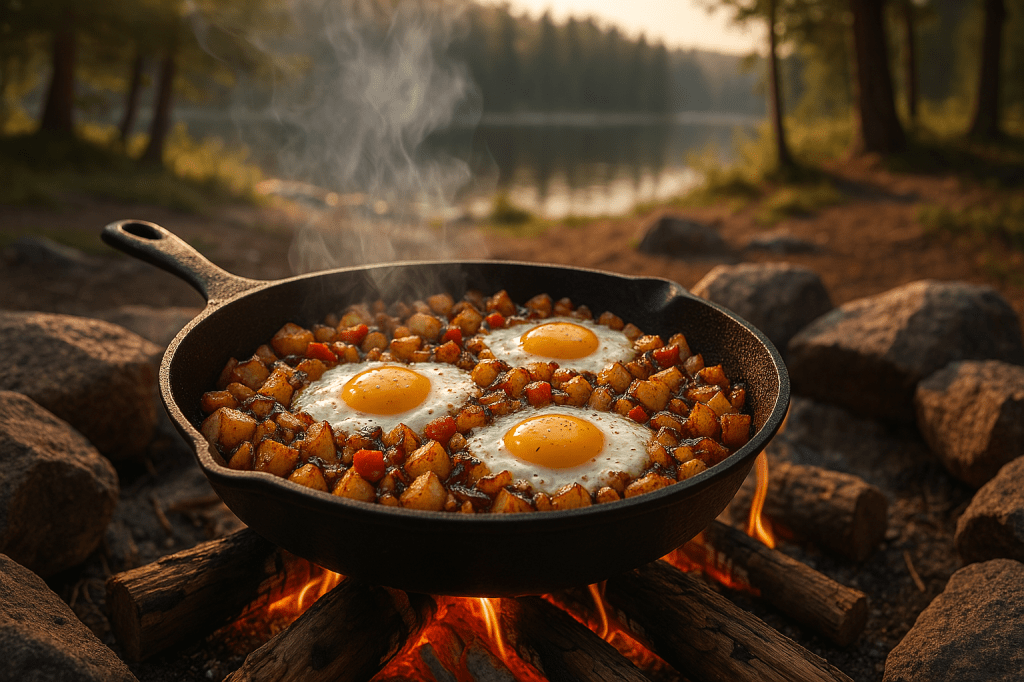
There’s something magical about starting the day with the sizzle of a hot skillet over an open flame. The aroma of caramelized onions, crispy potatoes, and runny-yolked eggs drifting through the morning air is enough to make anyone a believer in the power of a good campfire breakfast. Whether you’re waking up at a campsite, in your backyard, or at a cabin retreat, cast iron skillet hash with eggs is the kind of meal that grounds you in the moment and fuels you for the day ahead.
This dish embodies rustic simplicity and hearty satisfaction. It’s flexible, endlessly customizable, and naturally suited to the heat control and flavor that come with cooking over fire. More than just a meal, it’s an experience—one that connects you to a centuries-old tradition of cooking with fire, right in the heart of nature.
The term ‘hash’ comes from the French word hacher, meaning ‘to chop.’ This breakfast staple originated as a clever way to use up leftovers—diced meats and vegetables fried together to form a nourishing one-pan meal. Hash became popular in 18th- and 19th-century America, especially among pioneers, soldiers, and loggers who needed calorie-dense meals that were easy to make with basic tools and open flames.
The cast iron skillet has been a staple in American kitchens (and campgrounds) since the 1800s. Its ability to retain and evenly distribute heat made it ideal for use over wood-burning stoves and campfires alike. When you combine hash with the seasoned power of cast iron, you’re embracing a time-tested duo that has fed explorers, families, and food lovers for generations.
3 Tips for Perfect Campfire Skillet Hash & Eggs
1. Get the Fire Just Right:
Too hot, and your potatoes will scorch on the outside while staying raw inside. Too cool, and you’ll be waiting forever. The best heat for skillet cooking is a steady bed of hot embers—not open flames. Let your fire burn down for 30–45 minutes before you cook, then move some glowing coals under your skillet. Add or remove coals to manage the heat like a stovetop burner.
2. Pre-cook or Parboil Potatoes:
Want crisp on the outside and fluffy inside? Either dice small and cook slowly or parboil your potatoes before heading to the fire. This extra step gives you that golden-brown crunch without undercooked centers. Thin russet or Yukon gold potatoes work best for this texture.

3. Add Eggs at the End, Not the Beginning:
Eggs cook quickly and are best when nestled into the hash at the end. Use a spoon to create small wells, crack eggs in, and cover the skillet with a lid or foil. Let them steam gently until the whites are set and the yolks are still runny—perfection.
Ingredients
– 3 medium Yukon gold or russet potatoes, diced (parboiled or raw)
– 1/2 yellow onion, diced
– 1/2 bell pepper, diced
– 1/4 cup chopped cooked bacon or sausage (optional)
– 2 tablespoons olive oil or bacon fat
– 4 large eggs
– Salt and pepper to taste
– Optional: garlic powder, smoked paprika, or chili flakes
– Fresh herbs for garnish (parsley, thyme, or green onions)
Recipe Instructions
1. Prepare the Fire: Burn wood down to glowing embers. Place your cast iron skillet on a grate or rock ring over medium heat.
2. Cook the Veggies: Heat oil or fat in the skillet. Add onions and bell peppers. Cook until soft and lightly browned, about 5–7 minutes.
3. Add Potatoes: Stir in potatoes. If raw, cover and cook for 15–20 minutes, stirring occasionally. If parboiled, cook uncovered 8–10 minutes until crispy and golden.
4. Season and Mix In Meat: Add bacon or sausage if using. Season with salt, pepper, and optional spices.
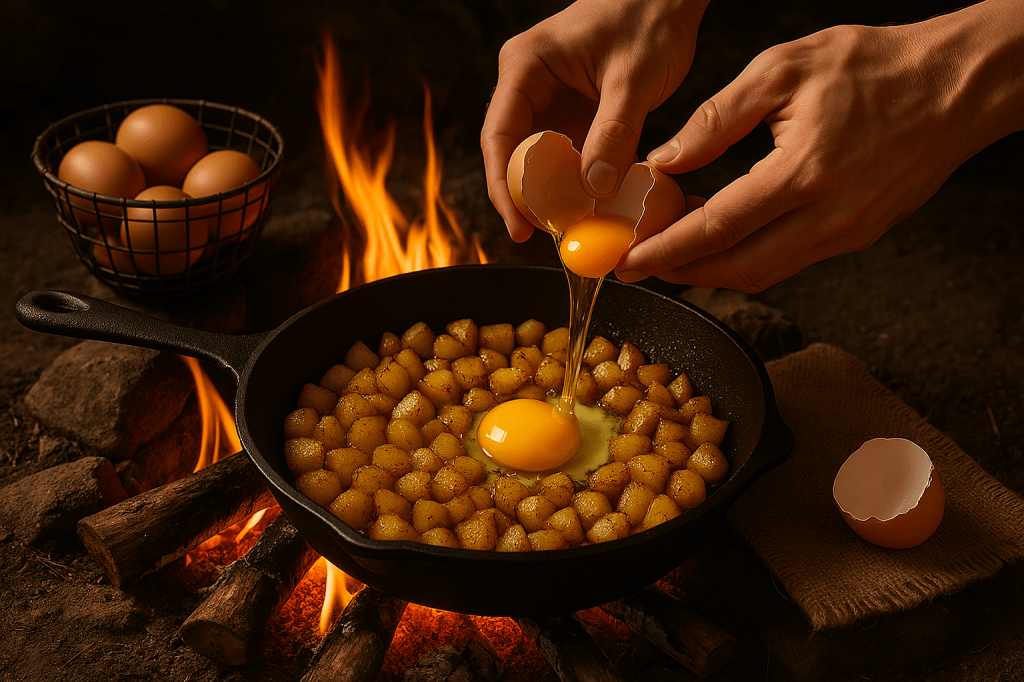
5. Make Wells and Add Eggs: Use a spoon to make four shallow divots in the hash. Crack an egg into each. Cover skillet with a lid or foil and cook 3–6 minutes, depending on desired yolk doneness.
6. Serve Hot: Garnish with herbs. Slice right from the skillet and serve while sizzling!
Serving Size Recommendation:
Serves: 2–4 (2 people if it’s the main event, 4 if served with sides)
Estimated Nutritional Info (Per Serving, based on 4 servings):
Calories: ~350
Protein: 13g
Carbohydrates: 25g
Fat: 22g
Fiber: 3g
Sugar: 2g
Key Takeaways & Conclusion:
Cooking breakfast over a campfire isn’t just functional—it’s nostalgic, grounding, and deeply satisfying. Cast iron skillet hash with eggs is one of those rare dishes that’s easy to master, endlessly adaptable, and rich in both flavor and tradition.
Key Takeaways:
– Build a steady coal bed, not a raging flame
– Parboil potatoes for quicker, crispier results
– Nestle and steam eggs last for perfect yolks
Pairing Suggestions:
Sides: Fresh fruit salad, toasted campfire bread or English muffins, fire-grilled tomatoes
Drinks: Campfire coffee with a splash of cream, fresh orange juice, smoky black tea or a morning Bloody Mary
Looking for a different music streaming option? Check out a free trial to Amazon Music – Click here!

 Food by the Fire
Leave a reply to Campfire Breakfast: Cast Iron Skillet Hash & Eggs – Food by the Fire | My Meals are on Wheels Cancel reply