
This post contains affiliate links. If you buy through them, Food by the Fire may earn a small commission at no extra cost to you.

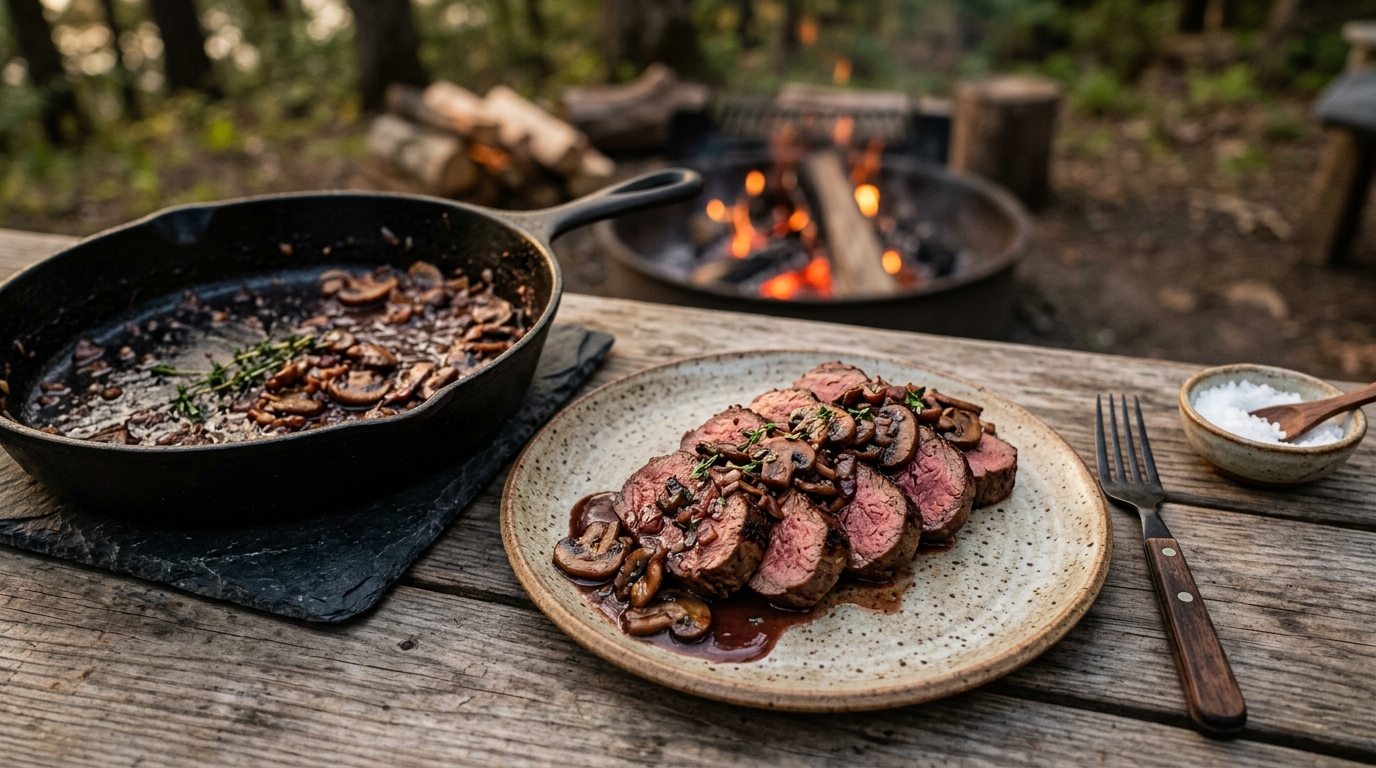
There’s a particular hour in the fall when the light turns copper, the air gets sharp, and a good fire starts to feel like the best idea anyone ever had. That’s the hour for backstrap.
It’s the tenderloin of the deer, lean and mild, and it asks for very little. A ripping-hot cast iron skillet, a few minutes per side, and a pan sauce built right on top of the browned bits. Shallots, mushrooms, thyme, and red wine, all in the same skillet. Nothing wasted.
The trick is restraint. Venison has almost no fat to forgive you, so you cook it fast, pull it early, and let it rest. Do that, and you get a rosy, tender slice with a glossy mushroom sauce that tastes like the woods in the best way.
At a Glance
- Prep time: 20 minutes, plus 30 minutes to take the chill off the meat
- Cook time: About 30 minutes (8–10 minute sear, 10 minute rest, 12 minute sauce)
- Servings: 4
- Pan: 12″ cast iron skillet on a cooking grate over coals
- Fire: Hardwood coals, or one full chimney (about 40 briquettes) of charcoal. Hot bed for the sear, thinned out for the sauce.
- Difficulty: Easy to moderate. The only real skill is pulling the meat on time.
Gear & Tools
Venison backstrap gives you very little room for error. It has almost no fat, so the gap between rosy and dry is a minute or two, and your gear is what keeps you inside that gap. Four tools did the work on this cook: the skillet, the thermometer, the gloves, and the tongs. The grate, chimney, and a couple of extras just make it easier to repeat.
Building a kit from scratch? Buy in this order: skillet, thermometer, gloves. You can improvise the rest.
Must-Have
-
12″ Cast Iron Skillet (what I used)
What to look for: A 12″ skillet with walls about 2″ deep, a flat cooking surface, a well-seasoned finish, and a small helper handle opposite the long one. The helper handle makes it far easier to tilt the pan for basting.
Why it matters here: Cold meat drops the temperature of a thin pan. Heavy cast iron holds its heat, so the crust forms instead of the meat steaming. It also holds two backstrap pieces and later 10 oz of mushrooms, and the browned bits left behind become the base of your sauce.
Care note: A wine sauce simmered for 10 minutes can dull thin seasoning. Wipe the skillet dry afterward and rub it with a little oil. -
Campfire Cooking Grate
What to look for: Heavy steel with a surface big enough for a 12″ skillet and its handle. It should sit level on its own legs or across the stones of your fire ring. Adjustable height is a bonus.
Why it matters here: The skillet should sit 3–4″ above the coals. Too close and the butter scorches before the meat browns. Too far and you never get a crust. A steady, level grate also means a hot skillet isn’t balanced on shifting logs. -
Instant-Read Meat Thermometer (what I used)
What to look for: A thin probe, a reading in about 2–3 seconds, and a display you can see in low light. Check it in a glass of ice water: it should read 32°F.
Why it matters here: The window for medium-rare backstrap is narrow, and the temperature keeps climbing 5–10°F while it rests. Slide the probe into the thickest part from the side, and pull the meat at 125–130°F. -
Heat-Resistant Gloves (what I used)
What to look for: Long-cuff leather or aramid gloves that cover your wrist and part of your forearm.
Why it matters here: The skillet handle sits right at the edge of the fire and gets as hot as the pan. You’ll grab it to tilt the pan for basting and again when you move it to the cooler side. Keep the gloves dry. Wet fabric carries heat straight through to your hand. -
Long-Handled Tongs (what I used)
What to look for: Stainless steel, 16″ or longer, with a lock and a firm spring. Flat or lightly scalloped tips grip a lean loin without tearing it. This great 5-in-1 set comes with other great options at a great deal!
Why it matters here: They keep your hands out of the radiant heat while you turn the meat and edge-sear it. Always turn with tongs, never a fork. Piercing the meat lets the juices out.
Nice-to-Have
-
Charcoal Chimney Starter
What to look for: A full-size chimney with a heat-shielded handle. Light it on bare dirt, gravel, or stone, never on wood or grass.
Why it matters here: A full chimney is the roughly 40 briquettes the sear needs, ready in 15–20 minutes without lighter fluid. If you’re cooking on hardwood coals instead, you can skip it. -
Flexible Boning or Fillet Knife
What to look for: A thin, flexible 5–6″ blade that is sharp and stays sharp.
Why it matters here: Silverskin is the tough, shiny membrane on a backstrap, and it turns chewy and curls in the pan. A thin blade slides under it and peels it off cleanly with little meat lost. Take the time to do this right. -
Silicone Skillet Handle Cover
What to look for: One sized for a 12″ skillet. Check the heat rating on the package.
Why it matters here: It takes the edge off the handle while you work the sauce on the cooler side of the fire. It is not a substitute for gloves, and the handle shouldn’t sit in the flames with it on.
Ingredients
For the backstrap
- 2 venison backstrap loins, about 1½–2 lb total, trimmed of silverskin and cut into 2 or 3 pieces (6–8″ long) to fit the skillet
- 1½ tsp kosher salt
- 1 tsp coarse black pepper
- ½ tsp garlic powder
- 2 tbsp high-heat oil (avocado, canola, or grapeseed)
- 2 tbsp butter
- 3 garlic cloves, smashed
- 3 sprigs fresh thyme
For the mushroom pan sauce
- 2 tbsp butter
- 10 oz cremini mushrooms, sliced ¼” thick
- 2 shallots, finely minced
- 2 garlic cloves, minced
- 1 tbsp fresh thyme leaves
- 1 cup dry red wine (Cabernet or Merlot works well)
- 1 cup beef stock
- 1 tsp Dijon mustard
- 1 tsp Worcestershire sauce
- 1 tbsp cold butter, cubed, to finish
- Salt and pepper to taste
- Chopped fresh parsley for garnish
Fire & Coal Setup
The rule of thumb: for a Dutch oven, double the diameter for the total briquette count at about 350°F. That’s 24 for a 12″ oven. A sear wants far more than that, so for a 12″ skillet I run about 40 briquettes, a full chimney, or the equivalent in glowing hardwood coals.
- Start: Light a full charcoal chimney, about 40 briquettes, or burn hardwood down to coals. They’re ready when the tops are covered in gray ash, about 15–20 minutes. New to fire building? My guide on how to build a fire for cooking covers it.
- Sear zone: Spread the coals in a tight, even bed. Set the grate over them with the cooking surface 3–4″ above the coals and the skillet right in the middle. You want it hot enough that you can only hold your hand over the grate for about 2 seconds.
- Sauce zone: When the meat comes off, rake or remove about half the coals and slide the skillet toward the cooler edge. The sauce wants a lively simmer, not a hard sear.
- Safe setup: Keep the fire on bare dirt, gravel, or stone inside a fire ring, and keep the prep table well back.
Step-by-Step Instructions

- Prep the meat. Trim off every bit of silverskin, the shiny, tough membrane, with a thin knife. Pat the backstrap very dry with paper towels. Mix the salt, pepper, and garlic powder and rub it all over. Let the meat sit out for about 30 minutes while the coals light. A dry surface is what makes a crust.
- Heat the skillet. Set the 12″ skillet on the grate over the hot coals, empty, for 5–8 minutes. Add the oil. It should shimmer and just begin to wisp smoke.
- Sear the first side. Lay the backstrap pieces in with long-handled tongs, leaving space between them. You should hear a hard sizzle. Leave them alone for 2–3 minutes, until the underside is deep brown and the meat lifts easily.
- Turn and baste. Turn each piece with tongs and sear 2 minutes. Add the 2 tbsp butter, smashed garlic, and thyme sprigs. When the butter foams, tilt the skillet carefully with a gloved hand and spoon the butter over the meat for about a minute. Turn the pieces onto their sides for 30 seconds each to brown the edges.
- Check the temperature. Slide an instant-read thermometer into the thickest part. For medium-rare, pull the meat at 125–130°F. The temperature climbs 5–10°F as it rests. Total sear time is usually 8–10 minutes, depending on thickness.
- Rest. Move the meat to a cutting board, tent it loosely with foil, and rest it for 10 minutes. Do not skip this. The juices settle back into the meat instead of running out when you slice.

- Reset the fire. Pour off all but about 1 tbsp of the fat, leaving the browned bits. Fish out the burnt garlic and thyme sprigs. Rake the coals thinner and slide the skillet toward the cooler side.
- Brown the mushrooms. Melt the 2 tbsp butter in the skillet. Add the mushrooms in a single layer and don’t stir for 2–3 minutes, until the undersides are golden. Then stir and cook another 3–4 minutes, until browned and the liquid cooks off.
- Add the aromatics. Stir in the shallots, minced garlic, and thyme leaves. Cook 1–2 minutes until the shallots turn soft and sweet-smelling.
- Deglaze. Pour in the red wine and scrape up every browned bit from the bottom. Simmer for 3–4 minutes, until the wine has reduced by about half and no longer smells sharp.
- Build the sauce. Add the stock, Dijon, and Worcestershire. Simmer 4–5 minutes, until the sauce is glossy and coats the back of a spoon. Pour in any juices from the resting plate.
- Finish with butter. Pull the skillet off the heat. Stir in the cold butter cubes until the sauce turns silky. Taste and season with salt and pepper.
- Slice and serve. Slice the backstrap across the grain into ½” medallions. Fan them on warm plates, spoon the mushroom sauce over the top, and finish with parsley.
Campfire Tips & Troubleshooting
- Pull it early. Lean venison dries out fast. Go by the thermometer, not the clock. USDA guidance for whole cuts of game is 145°F with a 3-minute rest, so cook to the level you’re comfortable with. My food cooking temperatures guide has the numbers.
- Dry meat, hot pan. Wet meat steams instead of sears. Pat it dry and let the skillet get fully hot first.
- Handle with care. A cast iron handle over a fire holds heat. Keep your gloves on every time you touch the skillet.
- Flare-ups. Dripping butter can flare up on the coals. If flames lick the skillet, slide it to the side for a moment and let them settle.
- Sauce too thin or too salty? Simmer a few more minutes to thicken it. Stock and Worcestershire carry salt, so taste before you add any.
Variations
- Bourbon pan sauce: Swap the red wine for ½ cup bourbon plus ½ cup extra stock. Remove the skillet from the heat before you pour in the bourbon.
- Wild mushroom mix: Swap half the cremini for shiitake, oyster, or other mushrooms you know are safe to eat. Buy them from a trusted source, and never guess on foraged ones.
- Creamy finish: After the stock reduces, stir in ¼ cup of heavy cream and simmer 2 minutes for a richer sauce.
Pairings
- For a side: Delicious Potato Foil Packets: A Tasty and Easy Outdoor Recipe — Tuck them on the coals while you sear. Potatoes are made for soaking up that mushroom sauce.
- For dessert: After the Trick-or-Treat: Apple-Cinnamon Dutch Oven Dump Cake — A warm, spiced apple dessert from the Dutch oven is a good way to finish an October supper.
- Same technique: Cast Iron Ribeye Steak with Garlic Herb Butter: The Fire-Cooked Steakhouse Experience — Same skillet, same hot sear. Great to try if you want to practice before the deer season hands you a backstrap.
- Coming up — Thanksgiving: The Three Must-Have Thanksgiving Side Dishes for a Midwest Feast — Thanksgiving is about six weeks out. Here are three sides for the holiday table.
Gather Round the Fire
Good venison doesn’t need much. It needs a hot pan, a steady hand, and someone to pull it off the heat before you think it’s ready. The sauce takes care of the rest.
Cook it on the next cold evening and tell me how it turned out in the comments. Share it with the friend who always asks what’s for supper, and follow along for more Dutch oven and open-fire recipes. Now go unleash your inner culinary Firestarter.
Leave a Reply