
Introduction
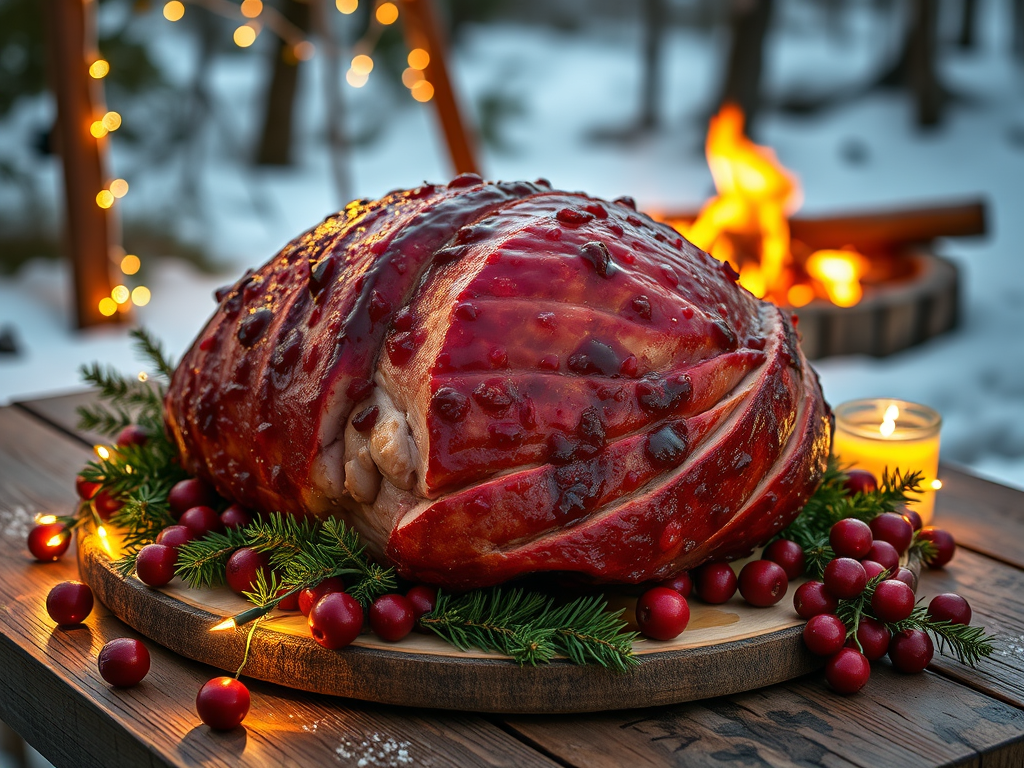
Nothing says Christmas in Indiana like juicy, smoky ham cooked low and slow until caramelized to perfection. While many families opt to bake their holiday ham indoors, we’re taking it outside where the magic of smoke and flame elevates the flavor to another level. This Fire-Roasted Cranberry Glazed Ham brings together sweet, tart, and savory in a way that feels right at home around the campfire or smoker.
Ham has long been a staple of Midwest holiday gatherings. In Indiana, it’s often glazed with maple syrup, brown sugar, or even cola. This version uses a homemade cranberry glaze that balances festive tang with the deep richness of smoked meat. It’s cooked bone-in on a covered grill or smoker, allowing the flavor to soak into every slice.
Whether you’re gathering with family at home, celebrating in a snowy cabin, or hosting an outdoor winter feast, this ham recipe delivers that perfect blend of holiday tradition and outdoorsy charm.
Differences from traditional bone-in and spiral cut ham
When it comes to ham, the differences between traditional bone-in hams and spiral-cut hams highlight unique benefits that appeal to varying cooking preferences and serving styles.
Traditional Bone-In Ham
Moisture Retention: Traditional bone-in hams come with the bone still intact, which helps to retain moisture during the cooking process. The bone acts as a barrier that protects the meat from drying out, especially when exposed to heat for longer periods.
Flavor Profile: The bone contributes to a deeper flavor, as it can infuse the meat with rich, savory notes during cooking. When braised or roasted, the marrow can seep into the surrounding meat, enhancing its overall taste.
Slicing Flexibility: With a traditional bone-in ham, you can choose how thick or thin to slice based on your preferences or serving needs. This flexibility can be particularly advantageous for larger gatherings or when serving a variety of dishes.
Spiral-Cut Ham
Convenience: Spiral-cut hams come pre-sliced in a spiral pattern, making them incredibly easy to serve. Simply pull away slices, and you’re ready to go — no need for additional carving tools or effort, saving time in food preparation.
Self-Basting Characteristics: The spiral cut allows glazes and marinades to penetrate between the slices, enhancing the flavor throughout the ham. This feature ensures a more even application of seasonings and sauces, allowing for a deliciously flavored bite every time.
Presentation: The visual appeal of a spiral-cut ham is noteworthy. The technique results in uniform slices that can add an elegant touch to your table setting, making it a popular choice for festive occasions.
Both types of hams have their own merits, and the choice between traditional bone-in and spiral-cut boils down to personal preference. If you enjoy the hands-on approach of slicing and appreciate maximum moisture retention, a traditional bone-in ham is ideal. Conversely, if convenience and easy serving are your priorities, a spiral-cut ham may be the better option, providing a flavorful and visually appealing centerpiece for your meal.
Use Indirect Heat with a Drip Pan
You want steady heat and smoke, not a roaring fire. Set up your fire with your favorite charcoal pushed to the sides and place a drip pan underneath the ham. This keeps flare-ups away and maintains gentle, even cooking. If you’re using a smoker or kettle grill, aim for a temperature of 250 to 275 degrees Fahrenheit.
When selecting wood for smoking, it’s important to consider both the type of wood and the form it comes in; wood chunks, such as cherry or apple, provide a slower burn and a more gradual release of flavor, which is ideal for longer cooking times, while wood chips, though they ignite quickly and produce intense smoke, may overwhelm delicate dishes if not monitored closely. The subtle sweetness of cherry or apple wood pairs beautifully with a cranberry glaze, enhancing the overall taste without overpowering it, making chunks a preferable choice for a balanced flavor profile.
Glaze in Layers During the Final 30 Minutes
Apply your glaze in thin layers every 10 minutes during the last half hour of cooking. This builds a glossy, sticky crust without burning the sugars. Be patient and let each coat set before adding the next.
For extra depth, reserve some glaze to brush on after slicing. It gives a fresh pop of flavor and brings the presentation together.
Recipe: Fire-Roasted Cranberry Glazed Ham
Ingredients
- 1 fully cooked bone-in spiral ham (8 to 10 pounds)
- 1 tablespoon Dijon mustard
- 1 tablespoon apple cider vinegar
- 1 cup whole cranberry sauce (store-bought or homemade)
- ½ cup brown sugar
- ¼ cup orange juice
- ½ teaspoon ground cinnamon
- ¼ teaspoon ground cloves
- 1 tablespoon butter
Optional Wood for Smoking: Cherry or apple chunks
Tools: foil pan, drip pan basting brush, meat thermometer
Detailed Cooking Instructions
Step 1: Prepare the fire
Light your fire and set it for indirect heat. Arrange coals to one side or use a two-zone setup. Place a drip pan in the center of the grill and bring the temperature to 250 to 275 degrees Fahrenheit.
Step 2: Make the cranberry glaze
In a saucepan or cast-iron skillet, combine cranberry sauce, brown sugar, orange juice, mustard, vinegar, cinnamon, cloves, and butter. Simmer over low heat until slightly thickened, about 10 to 15 minutes. Remove from heat.
Step 3: Set the ham on the grill
For a precooked ham, place the ham, cut side down, in a cast iron pan or foil tray. Set it over indirect heat. Close the lid and cook for 1½ to 2 hours, depending on size. You are reheating the ham while adding smoke flavor.
Step 4: Begin glazing
When the ham reaches about 120 degrees internally, start brushing on glaze every 10 minutes for the next 30 to 40 minutes. Let the sugar caramelize but avoid burning by keeping it off direct flame.
Step 5: Finish and rest
Remove the ham from the grill once it reaches 140 degrees Fahrenheit, or as it is labeled (most say cook to 165 degrees Fahrenheit for maximum safety. Tent it with foil and let it rest for 10 to 15 minutes. This redistributes the juices and makes slicing easier.
Step 6: Slice and serve
Pull away spiral slices, brush with remaining glaze if desired, and serve warm. If using a traditional bone-in ham, slice to your preferred thickness and serve. A sharp knife is a chef’s best friend!
Nutrition Summary
Servings: 16
- Calories per serving: Approx. 300
- Protein: 22 grams
- Fat: 14 grams
- Carbs: 20 grams
- Sugar: 17 grams
- Sodium: 800 mg
Values may vary depending on ham brand and glaze thickness.
Great Pairing Suggestions
Round out your rustic Christmas dinner with a few hand-picked sides straight from the Food by the Fire kitchen:
- 🔗 Grilled Corn on the Cob
Sweet, smoky, and easy to grill alongside the ham. - 🔗 Campfire Sweet Potato Foil Packets
Swap white potatoes for sweet and toss in cinnamon or maple butter for a festive twist.
Drink Ideas:
- Warm spiced apple cider
- Cranberry bourbon cocktail
- A dry Indiana Riesling or chilled amber ale
 Food by the Fire
Leave a comment